What ANSI Rating Do Safety Glasses Need for Jobsite Work?

Choosing safety glasses isn't just about finding a pair that's comfortable—it starts with making sure they're designed to withstand the hazards you'll encounter on the job. Understanding ANSI safety ratings helps ensure your eye protection is built for real-world impact rather than everyday eyewear.
Quick Answer
For most construction, maintenance, manufacturing, and workshop environments, safety glasses should meet the ANSI Z87.1 standard. This certification indicates the eyewear has been tested for impact resistance and is designed specifically for workplace hazards.
Why ANSI Ratings Matter
Ordinary glasses—even those with durable lenses—aren't designed to protect against flying debris, grinding sparks, wood chips, or metal fragments.
ANSI-rated safety glasses are tested to withstand impacts that ordinary eyewear cannot.
Selecting properly certified eye protection helps reduce the risk of serious eye injuries while supporting workplace safety requirements.
Keep in mind that no single style of eye protection is appropriate for every task. Dust-heavy work, chemical splash hazards, or grinding operations may require additional protection beyond standard safety glasses.
Recommended Products
These lightweight ANSI Z87.1-rated safety glasses are an excellent everyday choice for contractors, workshop owners, maintenance technicians, and manufacturing professionals. Their anti-fog lenses and pressure-diffusion temples make them comfortable enough for extended wear.
When airborne dust or fine debris becomes a concern, sealed safety goggles provide additional protection that standard safety glasses cannot. They're especially useful for concrete cutting, sanding, demolition, and other dust-producing tasks.
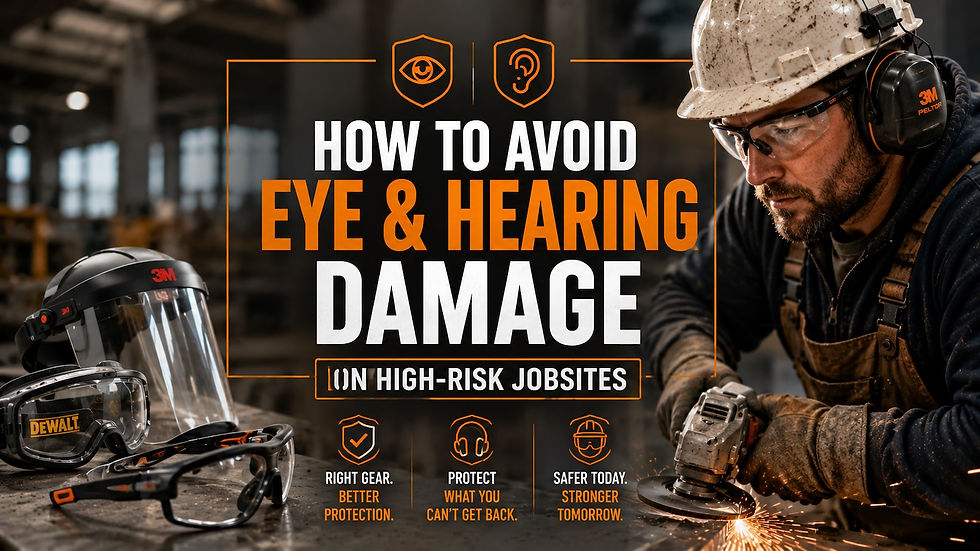
For grinding, cutting, or operations involving larger flying debris, a face shield should be worn in addition to ANSI-rated safety glasses—not instead of them. This creates a layered protection system for higher-risk work.
Clean lenses improve visibility and reduce the temptation to remove your eye protection during detailed work. A dedicated microfiber cloth helps maintain anti-fog and scratch-resistant coatings without damaging them.
Protecting your safety glasses when they're not being worn helps prevent scratched lenses, bent frames, and unnecessary replacements. A hard protective case keeps your eye protection ready for the next job.
Related Reading
If you're building a complete PPE system, don't stop with eye protection.
Read our full guide:
You'll learn how safety glasses, face shields, hearing protection, and proper PPE maintenance work together to provide more complete workplace protection.
Final Thoughts
At Bastian Operational, we believe eye protection should never be treated as an afterthought. Choosing ANSI-rated safety glasses that match the hazards of your work—and keeping them clean and protected—helps preserve one of your most valuable tools: your vision.